VillageWalk's Roof Problem Isn't the Roof. It's the Calendar.
September 24, 2026
September 24, 2026
A VillageWalk seller called us this summer holding an insurance quote that didn't make sense to her. Her home, built in the original phase of the community back when DiVosta was still the builder, has a barrel tile roof with no visible damage, no missing pieces, no history of leaks. Her prior carrier had renewed her without a second glance for over a decade. Then, at her most recent renewal, the letter arrived asking for a roof certification before they'd continue coverage.
Her roof hadn't changed. The calendar had.
Florida's insurance market has settled on 15 years as the age at which a roof stops being invisible to underwriters. The Florida Department of Financial Services says a carrier cannot refuse to write or renew a policy solely because a roof is under 15 years old. Once a roof crosses that line, though, the rules shift: insurers can require a certified inspection, and if that inspection doesn't show at least five more years of useful life, they can decline or drop coverage.
That threshold was built around asphalt shingles. Tile is a different material with a different physics. A well-installed concrete or clay tile roof commonly lasts 30 to 50 years, and clay in particular can outlive the mortgage that financed it. Most of VillageWalk was built with exactly that kind of tile, the Mediterranean barrel-style roofs that give the community its architectural identity.
The problem is that carriers largely apply the same 15-year scrutiny window to both. A tile roof at year 16 gets flagged for the same paperwork as a shingle roof at year 16, even though one of them has done roughly a third of its expected job and the other has done nearly all of it.
Roof material | Typical functional lifespan | Age insurers begin requiring scrutiny |
|---|---|---|
Asphalt shingle | 15 to 20 years | 15 years |
Concrete or clay tile | 30 to 50 years | 15 years |
Metal | 40 to 70 years | 15 to 20 years |
That gap between column two and column three is the whole story. It's not that your roof failed some test. It's that the test doesn't know the difference between your roof and your neighbor's shingles three subdivisions over.
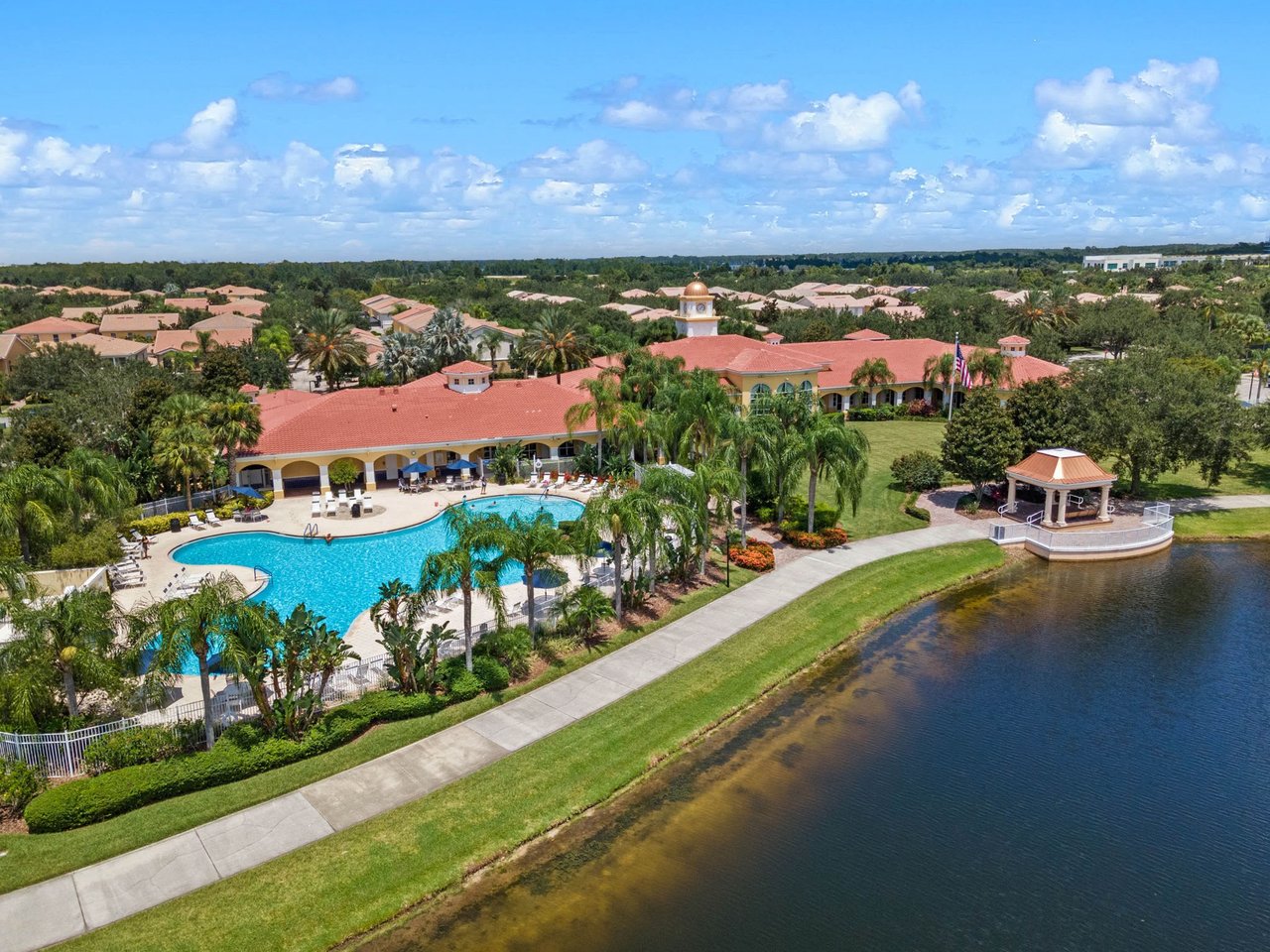
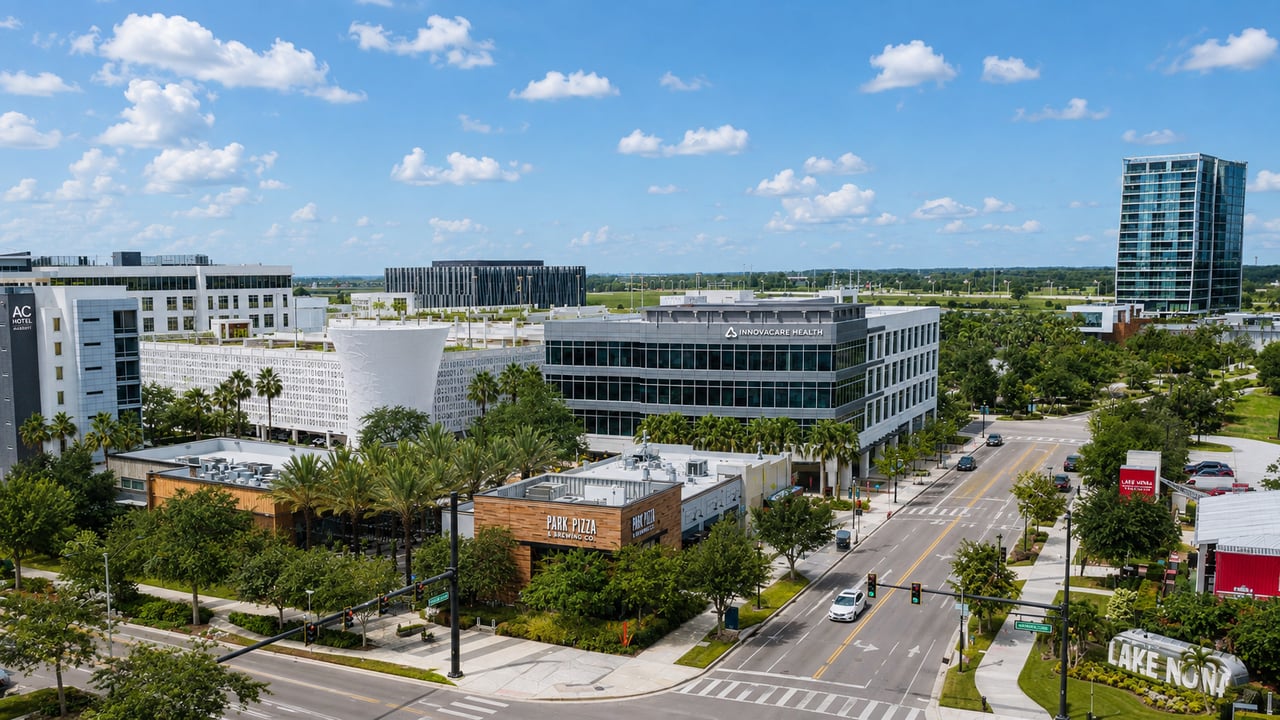
VillageWalk at Lake Nona was built out over ten years, from 2006 to 2016, first by DiVosta Homes and then by Pulte after Pulte acquired the DiVosta brand. The community holds more than 1,200 homes across single-family houses, attached villas, and townhomes, all sharing the same Town Center and the same general tile-roof aesthetic.
That decade-long build window matters more than most sellers realize. A home from the 2006 to 2010 stretch of construction is now 16 to 20 years old, which puts its roof squarely inside the insurance scrutiny zone we just described, regardless of how the tile actually looks. A home from the later 2012 to 2016 phase is still under the 15-year line and will cross into that same zone sometime in the next few years.
This is a different timeline than the one that applies across the street at Enclave at VillageWalk, which was built between 2015 and 2021. Those homes are mostly still under the 15-year threshold and won't start hitting this particular friction point for several more years. If you own in the Enclave, file this away for later. If you own in the original VillageWalk, especially anything from the first half of that build-out, this is a 2026 conversation, not a future one.
Florida lawmakers have been actively trying to close the gap between roof age and roof condition.
There's a practical piece to this too. Since 2024, the list of professionals authorized to certify a roof's remaining useful life has expanded to include licensed roofing contractors, not just general contractors, home inspectors, and engineers. That widens the pool of people who can write the letter that keeps a policy in force, and it means a VillageWalk seller doesn't have to track down a structural engineer to get a five-minute answer a qualified local roofer can provide.
None of this eliminates the paperwork. It does mean the paperwork has a clearer path and a faster resolution than it did even two years ago.
There's a wrinkle in Lake Nona that doesn't show up in generic roofing guides. Northmen Roofing, a contractor with a longstanding presence in the community, has noted publicly that Lake Nona's tile roofs, including those in Village Walk, often use specialty and less common tile profiles that aren't easy to source when a repair is needed.
That scarcity interacts with a separate Florida building rule. The Mesa Insurance Agency says that if repairs touch more than 25 percent of a roof's surface in a 12-month period, the entire roof has to be brought up to current code, not just the repaired section. Picture a VillageWalk seller with a handful of cracked or displaced tiles after a summer storm. If the exact tile isn't available, a contractor may end up replacing a larger section than the original damage justified, simply to keep the roof visually and functionally consistent, and that larger scope can tip the job over the 25 percent line. What started as a patch becomes a re-roof conversation.
This is worth knowing before you list, not after an inspector finds it during an active contract.
If your VillageWalk home is in that 15 to 20 year window, two pieces of paper do most of the work of neutralizing this issue before a buyer or their lender ever raises it:
Having both in hand before you go to market does two things. It answers the insurance question before a buyer's lender asks it, and it gives you leverage in a negotiation where an uninformed buyer might otherwise assume an aging tile roof means an aging problem.
Does this apply to villas and townhomes the same way it applies to single-family homes in VillageWalk? The insurance age threshold is about the roof itself, not the home's structure type, so a villa or townhome with an original tile roof from the same build era faces the same scrutiny window as a detached single-family home of that vintage.
If my roof is only 12 years old, do I need to worry about any of this yet? It's still worth knowing which side of that line your home's construction year puts you on, since VillageWalk's build-out spanned a full decade.
Is a roof certification the same thing as a home inspection? No. A general home inspection during a sale covers the whole property. A roof certification is a narrower, insurance-focused document that specifically addresses age, condition, and remaining useful life, and it's the document a carrier or lender will actually ask for.
If you're weighing a sale in VillageWalk, or trying to figure out what a specific phase of the community means for your timeline, Sanz Luxury Team can walk through what your home's build year means for pricing, positioning, and the paperwork a buyer's lender will expect to see. Get Your Luxury Home Valuation and start the conversation with the facts already on the table.
This article is general information, not legal, tax or financial advice. Consult a qualified professional about your situation.
Stay up to date on the latest real estate trends.




Looking to sell your home, relocate, or invest in a new construction or custom-built home? The Sanz Luxury Team, powered by eXp Realty, offers a team of highly skilled professionals dedicated to providing exceptional service. With our intelligence, creative problem-solving skills, and proven track record, we're committed to elevating your real estate experience. Let us guide you to success.