Remote Home Buying In Lake Nona: A Step-By-Step Playbook
May 7, 2026
May 7, 2026
Moving to Lake Nona from out of town can feel exciting and overwhelming at the same time. You may be trying to learn the area, compare homes, line up financing, and make a confident decision without being here in person for every step. The good news is that remote home buying in Lake Nona is very doable when you follow a clear process and work with the right local guidance. Let’s walk through the playbook.
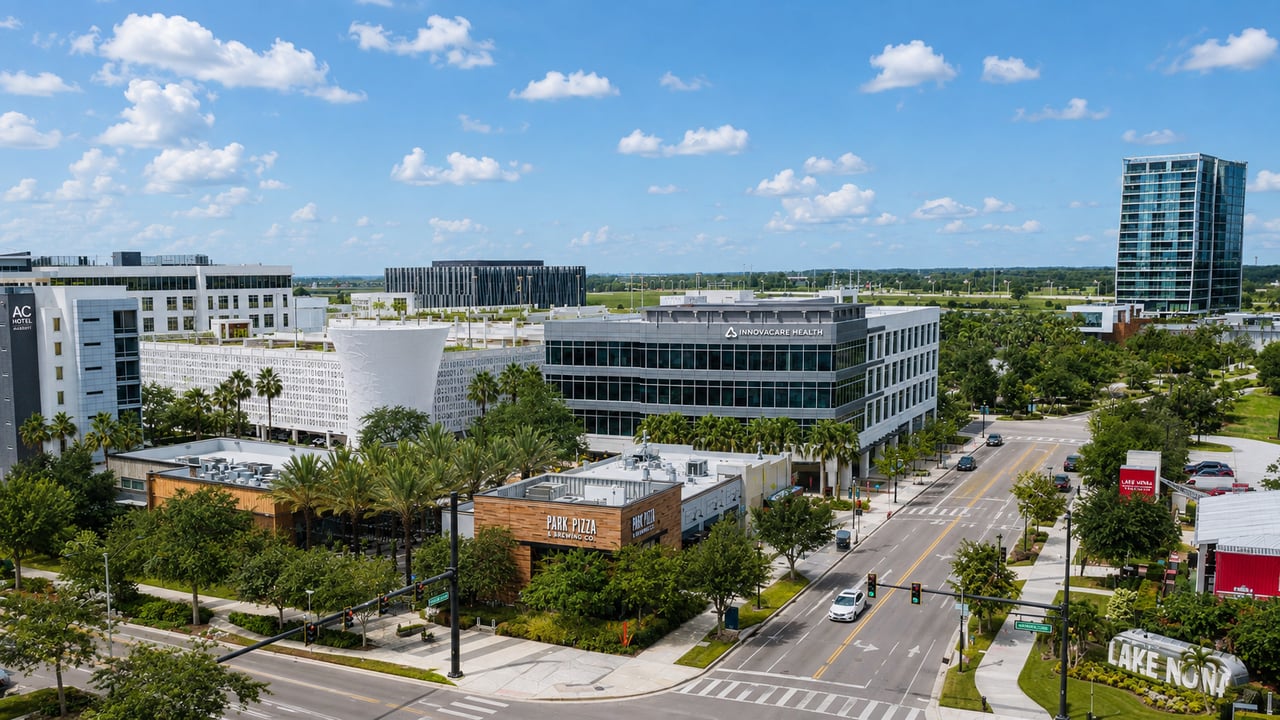
Lake Nona is a master-planned district in southeastern Orlando and spans about 17 square miles, according to the City of Orlando and the Lake Nona fact sheet. It sits next to Orlando International Airport, which makes travel in and out easier if you need a quick visit before or after closing. That location is one reason remote purchases are a practical fit here.
The area also has a strong employment base tied to Medical City. UCF places its College of Medicine in Lake Nona, along with UCF Lake Nona Hospital and UCF Lake Nona Cancer Center, and the Orlando VA Medical Center is also located there. The broader health and life sciences hub includes Nemours Children’s Health, the UF Research & Academic Center, GuideWell Innovation Center, and J&J Learn.
For many relocating professionals, that combination matters. If your job move is tied to healthcare, research, tech, or related industries, Lake Nona often makes sense as a buy-before-you-arrive market. You can build a smart plan from a distance without guessing your way through it.
Before you schedule a single virtual showing, get clear on how you want to live. Remote buyers do best when they separate must-haves from nice-to-haves early in the process. That helps you make faster, more confident decisions when the right home appears.
Start with the basics:
This step matters even more in a master-planned area like Lake Nona, where communities can offer different layouts, fee structures, and lifestyle features. A clear brief gives your search focus and keeps you from falling in love with the wrong property online.
A remote purchase works best when your team is organized from day one. You need people who can communicate clearly, move quickly, and keep details from slipping through the cracks.
Because Florida allows electronic signatures in real estate transactions when statutory requirements are met, digital offer writing and contract workflows are common and practical. That legal framework makes it easier to review, sign, and respond without being physically present in Orange County.
Your team should be ready to help you with:
For a relocation-driven move, local knowledge is not a luxury. It is part of risk management.
Online photos are helpful, but they should never be your only filter. A remote buyer needs a showing process that reveals layout, condition, surroundings, and practical details that polished listing media may not fully capture.
Ask for virtual tours that go beyond the highlight reel. You want to see room flow, storage, ceiling heights, natural light at different times if possible, and exterior context such as lot position and nearby road exposure. A strong remote showing should help you picture daily life, not just admire finishes.
It also helps to compare resale homes, builder inventory, and custom opportunities separately. Each path can come with a different timeline, negotiation style, and paperwork rhythm. Keeping them distinct makes your decision easier.
One of the biggest mistakes remote buyers make is focusing too much on the list price and not enough on the full ownership picture. In Lake Nona, that means confirming the recurring and closing-related costs tied to the specific property.
A key item to review is whether the home is in a community development district, or CDD. Under Florida law, the initial contract for a residential unit or parcel in a CDD must include a conspicuous disclosure that the district may levy taxes or assessments. Florida law also authorizes CDD special assessments for district facilities and services, so you should review that assessment schedule before making an offer.
You should also plan for Orange County recording-related costs. The Orange County Comptroller records deeds, mortgages, satisfactions, claims of lien, final judgments and orders, notices of commencement, and declarations of domicile. The office also collects documentary stamp taxes, intangible taxes, and recording fees, which means these local costs should be part of your budget conversation early.
According to Orange County, deed recording costs are $10 for the first page and $8.50 for each additional page, with extra name charges in some cases. Documentary stamp taxes are usually due at recording. These may not be the largest line items in your transaction, but they should never come as a surprise.
Once you have the right home, your offer strategy should balance speed, protection, and clarity. Remote buyers often feel pressure to move fast, especially during relocation. Fast is fine, but rushed is not.
Use your due diligence period wisely and make sure you understand every timeline in the contract. Since you may not be able to revisit the property easily, your written terms and contingency planning matter even more than they would in a local purchase.
This is also the stage where communication standards should tighten up. Everyone involved should know who is sending documents, where funds will go, and which deadlines are fixed.
If you cannot spend much time in the home before closing, the inspection report becomes one of your most important decision tools. Florida law defines home inspection services as a limited visual examination of readily accessible systems and components.
The inspector must provide a written report that identifies significant deficiencies, explains the reasons for them, and notes anything present but not inspected. The inspector is not required to provide repair estimates. That means your report helps you identify concerns, but you may need follow-up guidance if a major issue appears.
For remote buyers, focus on three questions:
A clean, organized review of the report can help you decide whether to proceed, renegotiate, or step back.
Wire fraud deserves a place in your buying plan, not just your closing checklist. The FBI warns that a common business email compromise scam involves fake wiring instructions that appear to come from a title company. The FTC advises confirming any wire request independently with the company before sending money.
In practical terms, that means you should never rely on an email alone for wiring instructions. Verify instructions using a known phone number you trust, not the number listed in a suspicious email or a reply thread. A five-minute verification step can protect a life-changing amount of money.
As closing gets closer, slow down and review everything carefully. The Closing Disclosure is a major quality-control checkpoint in a remote transaction.
Borrowers must receive the Closing Disclosure at least three business days before closing, and this is the stage when you should compare the final numbers to what you expected. If a fee looks unfamiliar or a credit is missing, raise the question right away. You want clarity before you sign, not after.
A closing may involve a title insurance company and an escrow company, and the closing agent typically helps coordinate funds, paperwork, and timing. When you are buying from out of town, that coordination role becomes even more important.
Florida gives remote buyers a workable legal path to close from a distance. The state’s online notarization law allows a Florida online notary who is physically located in Florida to perform a notarial act using audio-video communication technology, even if the signer or witnesses are elsewhere.
There are still formalities to respect. Florida law says most real estate conveyances must be signed in the presence of two subscribing witnesses, although that requirement can also be satisfied through audio-video technology and electronic signatures. Orange County further warns that a deed recorded without two subscribing witnesses may not be recognized by the property appraiser for tax-roll ownership tracking.
Florida’s electronic recording law also supports this process by providing that an electronic document can satisfy writing requirements and that a document accepted for recordation is deemed validly recorded even if it was signed, witnessed, or notarized electronically. In plain English, remote execution can still produce a valid recorded document when handled correctly.
For international buyers, there can be one more detail to manage. If a witness is remote from the principal, Florida requires that witness to verbally confirm U.S. residency and physical location within the United States or a U.S. territory at the time of witnessing. If you are signing from abroad, your closing team should address that early.
Once your documents are signed, the recording process matters. Orange County’s eRecording system is especially useful for remote closings because original documents never leave the sender’s possession, funds move by ACH for transfer taxes and recording fees, and eRecorded documents are often recorded the same day during business hours.
That is a major advantage over mailing documents. Orange County says mailed deeds normally take 7 to 10 business days to record. If timing matters, eRecording can help keep the finish line cleaner and faster.
Closing day is not the end of your checklist. After the transaction is complete, your deed and mortgage-related information become part of the public record.
Orange County offers a property fraud alert sign-up, which can be especially helpful if you will not be living locally full time right away. Public-record monitoring is a simple step that can help you keep an eye on your ownership records after the keys are in hand.
If you want a quick summary, here is the playbook:
Remote home buying in Lake Nona can be smooth, efficient, and secure when the process is built around local knowledge and disciplined execution. If you are relocating for Medical City, moving closer to the airport, or simply want a lifestyle-first home search handled with care, the right plan makes all the difference. When you are ready for concierge-level guidance in Lake Nona, connect with the Sanz Luxury Team.
Stay up to date on the latest real estate trends.





Looking to sell your home, relocate, or invest in a new construction or custom-built home? The Sanz Luxury Team, powered by eXp Realty, offers a team of highly skilled professionals dedicated to providing exceptional service. With our intelligence, creative problem-solving skills, and proven track record, we're committed to elevating your real estate experience. Let us guide you to success.